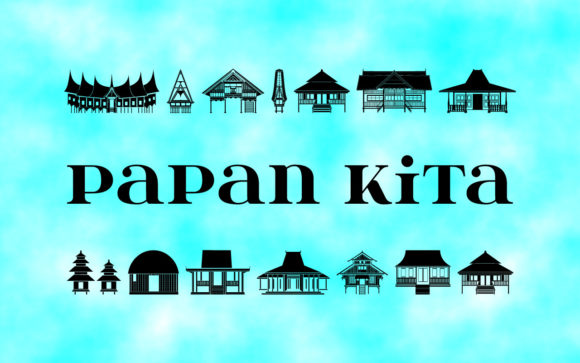
Bring Artistic Building Styles to Life with Papan Kita
If you have been scrolling through endless lists of sans serif fonts looking for something that actually sparks a creative reaction, it might be time to step away from the standard geometric shapes and embrace something with more texture. Papan Kita is a typeface that immediately commands attention, not through loudness, but through its intricate and artistic construction. Created by the talented Didik Pratikno, this font is classified as a dingbats style, but to categorize it merely by its technical function would be to undersell its visual impact. It is a stunning, beautiful, and unique asset that brings a distinct architectural flair to the table, offering a refreshing alternative to the standard script font or serif font we see in mainstream branding.
The Visual Language of Papan Kita
When we talk about "building styles" in typography, we are usually referring to the structural weight and the visual rhythm of the letters. Papan Kita takes this concept quite literally and abstractly. The characters are defined by interesting, almost sculptural forms that mimic the complexity of construction and design. It doesn't look like a standard handwritten font, nor does it behave like a rigid modern typography staple. Instead, it sits in a unique space where art meets utility. The visual personality of Papan Kita is bold and artistic. It has a presence that suggests craftsmanship and attention to detail, making it an ideal choice for projects that need to convey a sense of uniqueness and high-end design without relying on generic luxury tropes.
The appeal of Papan Kita lies in its versatility as a decorative element. Because it functions as a dingbats font, it allows you to use the alphabet not just for words, but for visual storytelling. You can use the characters to create borders, focal points, or standalone graphics. This makes it a powerful tool for creative professionals who want to add a layer of depth to their work. It is a premium font in spirit, designed for those who understand that typography is as much about the shape of the negative space as it is about the letters themselves.
Strategic Applications for Designers and Brands
Understanding where to deploy a font like Papan Kita is key to maximizing its value. While it is tempting to use a striking display font everywhere, strategic placement yields the best results. This typeface shines brightest in environments where visual hierarchy is established through bold, artistic choices rather than dense paragraphs of text.
Branding and Logo Design
For entrepreneurs and brand strategists, Papan Kita offers a distinct advantage in logo design. If you are building a brand identity for an architecture firm, a boutique design agency, or a handcrafted goods store, this font provides a visual shorthand for "creativity" and "structure." It moves beyond the standard wordmark, allowing you to create a logo that feels like a piece of art. When paired with a clean sans serif font for body text, the contrast creates a sophisticated visual hierarchy that guides the viewer’s eye exactly where you want it.
Packaging and Editorial Design
In the world of packaging design, shelf appeal is everything. Papan Kita can be used to create headlines or decorative motifs on boxes, bags, and labels that stand out in a crowded market. Its unique construction ensures that your product looks distinct. Similarly, in editorial design, such as magazine covers or book layouts, using Papan Kita for drop caps or pull quotes can break up the monotony of standard text blocks, adding a dynamic rhythm to the page layout.
Digital Presence and Social Media
Content creators and marketers know that social media graphics need to stop the scroll. Papan Kita is an excellent asset for creating Instagram stories, Pinterest pins, or YouTube thumbnails. Because it is a graphic-heavy typeface, it functions almost like an illustration. You can use it to spell out a short, punchy word like "Wow" or "New" and let the artistic style of the letters do the heavy lifting. It adds an immediate layer of professional polish to digital content, helping to boost audience engagement through visual intrigue.
Practical Guidance for Implementation
Adopting a new creative font into your workflow requires a bit of strategy to ensure it enhances rather than clutters your design. Here is how to approach Papan Kita effectively.
Evaluating Project Fit
Before you commit to Papan Kita, consider the tone of your project. This font has a distinct artistic personality. It works beautifully for creative, artistic, and boutique projects. However, if you are designing a technical manual or a corporate compliance report, the intricate nature of the glyphs might feel out of place. It is best suited for projects where "personality" is a key metric of success.
Mastering Font Pairing
One of the most common mistakes with display or dingbats fonts is pairing them with another complex typeface. Papan Kita demands a partner that supports it without competing for attention. I recommend pairing it with a highly legible, neutral sans serif font or a simple serif font. For example, using a font like Helvetica, Roboto, or a clean Georgia for your body copy will allow the artistic details of Papan Kita to pop. The contrast between the structured, neutral body text and the artistic headings creates a balanced visual experience.
Readability and Hierarchy
Because Papan Kita features intricate "building styles," readability at small sizes can be a concern. This is a typeface meant for headlines, large titles, and display usage. Avoid using it for long paragraphs or fine print. Use it to establish the top level of your visual hierarchy—the element that draws the viewer in—and then switch to a standard web design or print font for the information that needs to be consumed quickly.
Licensing and Usage
When you acquire Papan Kita, always review the licensing terms provided by Didik Pratikno. Ensure that your license covers your intended usage, whether that is for a single personal project, client work, or commercial merchandise. Respecting the licensing of design assets ensures that creators can continue to produce high-quality, unique fonts for the community.
Breathing Life into Your Ideas
The ultimate goal of any design asset is to elevate the message you are trying to convey. Papan Kita is more than just a collection of glyphs; it is a tool for adding life, energy, and a touch of the extraordinary to your work. Whether you are a hobbyist working on a scrapbook, a small business owner designing a new menu, or a publisher looking for a fresh cover style, this font offers a creative solution that is both beautiful and functional.
By incorporating Papan Kita into your toolkit, you are choosing to move away from the mundane. You are selecting a typeface that respects the tradition of design while pushing the boundaries of visual expression. Add it to your most creative ideas, and watch as the artistic building styles transform your concepts into something truly alive. It is a testament to the power of typography to not just convey words, but to create an atmosphere.