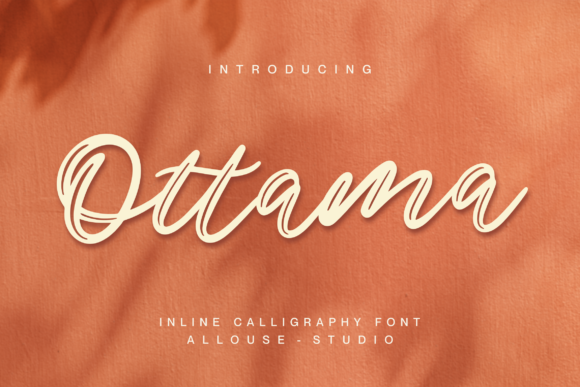
Ottama: Elevate Your Brand with a Handwritten Touch
There is a specific moment in the design process where a project goes from being a collection of assets to a living, breathing brand. Often, that transformation happens when you find the right typeface. I have spent years flipping through libraries of thousands of fonts—serif, sans serif, and display font options—and I can tell you that finding a premium font that actually feels human is rare. Ottama, a creative font offering from Allouse Studio, manages to bridge that gap between polished professionalism and organic warmth. It is a handwritten font that doesn't look like a child’s scrawl or a messy scratchpad; it looks like intentional, beautiful calligraphy designed for the modern market.
What sets Ottama apart immediately is its "nicely inclined" nature. It has a slant that suggests motion and energy, but it remains incredibly legible. If you have ever struggled with script font options that blur together or look illegible at smaller sizes, you will appreciate the construction here. The letterforms in Ottama are distinct. The curves are soft, but the baseline is steady. It carries a personality that is sophisticated yet approachable. It feels like the typography you would see on a high-end invitation or a boutique coffee label—something that invites you in rather than shouting at you. For designers, marketers, and entrepreneurs, this specific visual weight is crucial. You want a typeface that communicates care and quality before the audience even reads the words.
Where Ottama Shines: From Packaging to Social Media
When we talk about modern typography, context is everything. A font that looks stunning on a wedding card might fail miserably on a website header. However, Ottama is surprisingly versatile across different mediums. In the realm of packaging design, this font is a powerhouse. Imagine a skincare line or a artisanal food product; the handwritten style of Ottama suggests that a real person crafted this item. It adds a layer of trust and authenticity that rigid sans serif font choices often strip away.
Beyond physical products, the digital landscape is where Ottama really proves its worth as a creative font. Social media graphics are incredibly competitive. Users scroll through hundreds of posts in minutes. To stop that scroll, you need visuals that break the pattern of standard corporate text. Using Ottama for Instagram quotes, YouTube thumbnails, or Pinterest pins adds an immediate emotional hook. It feels personal. For bloggers and content creators, this font can become a signature element of your visual identity. It helps in building a brand identity that feels cohesive and memorable without looking like you used a default template.
We also cannot ignore its application in editorial design. While you wouldn't use a handwritten font for long-form body text (that is the job of a good serif font or sans serif font), Ottama is perfect for pull quotes, sub-headers, and magazine titles. It provides a visual break from the rigid structure of paragraphs. In web design, it can be used strategically for hero sections to draw the eye, provided you have tested its rendering on different screen sizes.
The Psychology of Style: How Ottama Influences Perception
Typography is silent communication. The fonts you choose tell your audience how to feel about your message before they process the meaning of the words. Ottama influences brand perception by softening the corporate edge. If you are a small business owner or a crafter, you likely want to convey friendliness and approachability. Ottama does exactly that. It suggests that there is a human behind the screen or the counter.
However, there is a fine line between "friendly" and "unprofessional." The reason Ottama works as a commercial font is that it maintains a level of consistency and professionalism. The kerning (the space between letters) is balanced, and the x-height is consistent enough to ensure readability. When you use this font, you aren't sacrificing legibility for style. This balance is vital for audience engagement. If your audience has to squint to read your headline, they will bounce. With Ottama, the reading experience is effortless, which keeps eyes on your content longer.
Practical Integration: Pairing and Usage Tips
Finding a premium font is only half the battle; knowing how to use it is the rest. One of the most common mistakes I see in logo design and marketing materials is the "font overload." Ottama is a strong display typeface with a lot of character. If you pair it with another loud font, the design will feel chaotic.
The best approach for font pairing with Ottama is contrast. Because Ottama has a script font feel with its inclined strokes, it pairs beautifully with a clean, geometric sans serif font. Think of fonts like Montserrat, Helvetica, or a clean sans-serif for your body copy. The clean lines of the sans-serif will ground the whimsy of Ottama, creating a visual hierarchy that is easy to navigate. Alternatively, for a more traditional or luxury vibe, try pairing it with a classic serif font. The sharp serifs can provide an elegant counterpoint to the soft, rounded edges of the handwritten style.
Before you commit to using Ottama for a major campaign, take the time to review the included styles. Allouse Studio often includes alternates and swashes in their design assets. These extra glyphs can be lifesavers. If the standard lowercase 'g' doesn't quite fit the flow of your logo, there might be an alternate version that connects better with adjacent letters. Exploring these features is what separates amateur design from professional execution.
Licensing and Long-Term Value
Finally, a practical note on usage rights. As a commercial font, Ottama comes with specific licensing terms. Whether you are a publisher printing thousands of copies or a freelance designer handing off files to a client, you need to ensure your license covers the end use. Most premium font licenses distinguish between desktop use (for print and images) and web use (for @font-face embedding). Always check the specific terms provided by the distributor to avoid legal headaches down the road. Investing in a proper license supports the foundry—Allouse Studio in this case—and allows them to continue creating high-quality design assets.
In conclusion, Ottama is more than just a collection of letters; it is a tool for connection. It is ideal for anyone looking to inject personality into their work, whether that is a wedding invitation, a startup website, or a social media campaign. It proves that modern typography doesn't have to be cold and clinical. With the right application, a handwritten font like Ottama can be the anchor of a strong, engaging, and memorable brand identity.